Overview
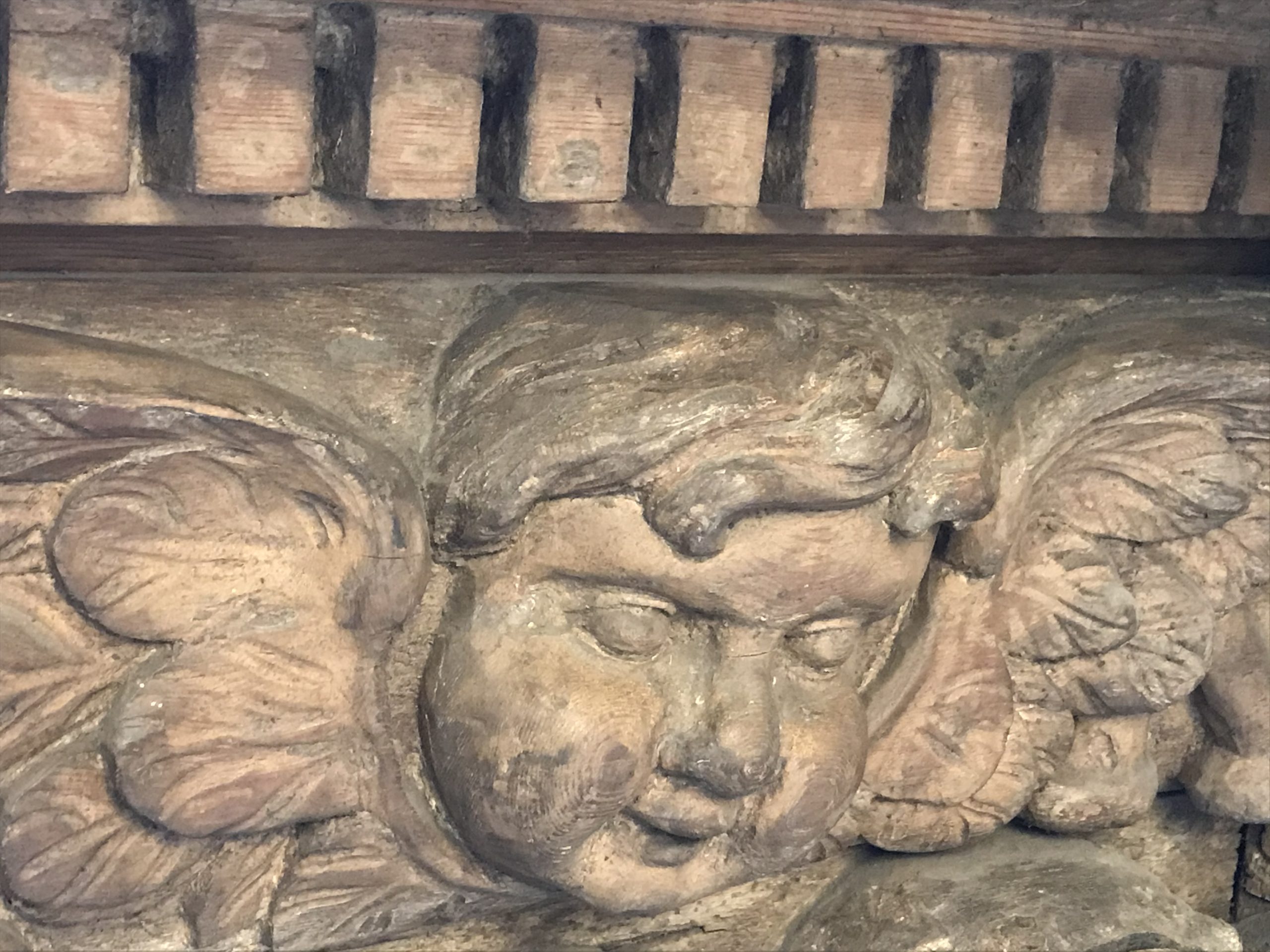
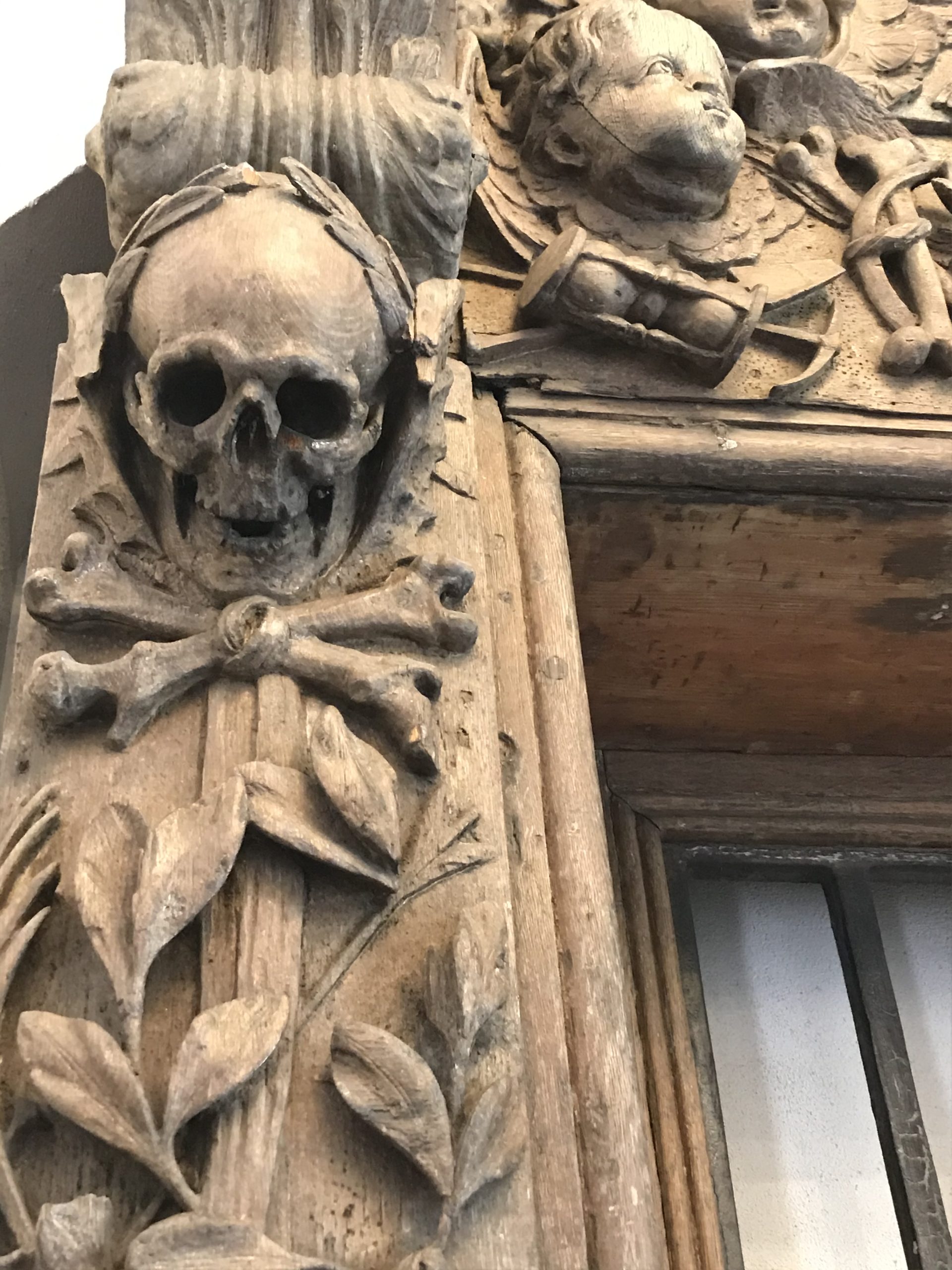
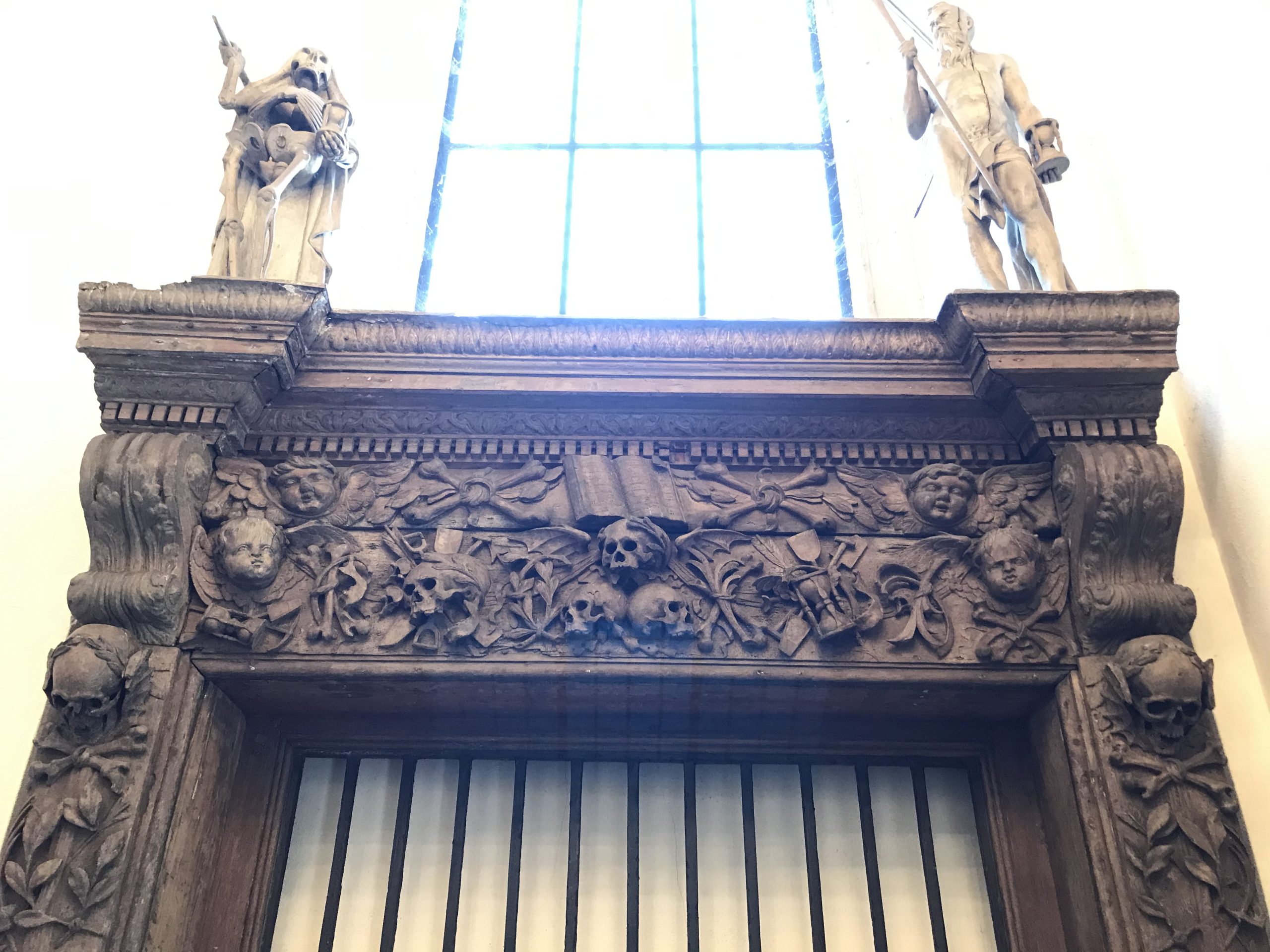
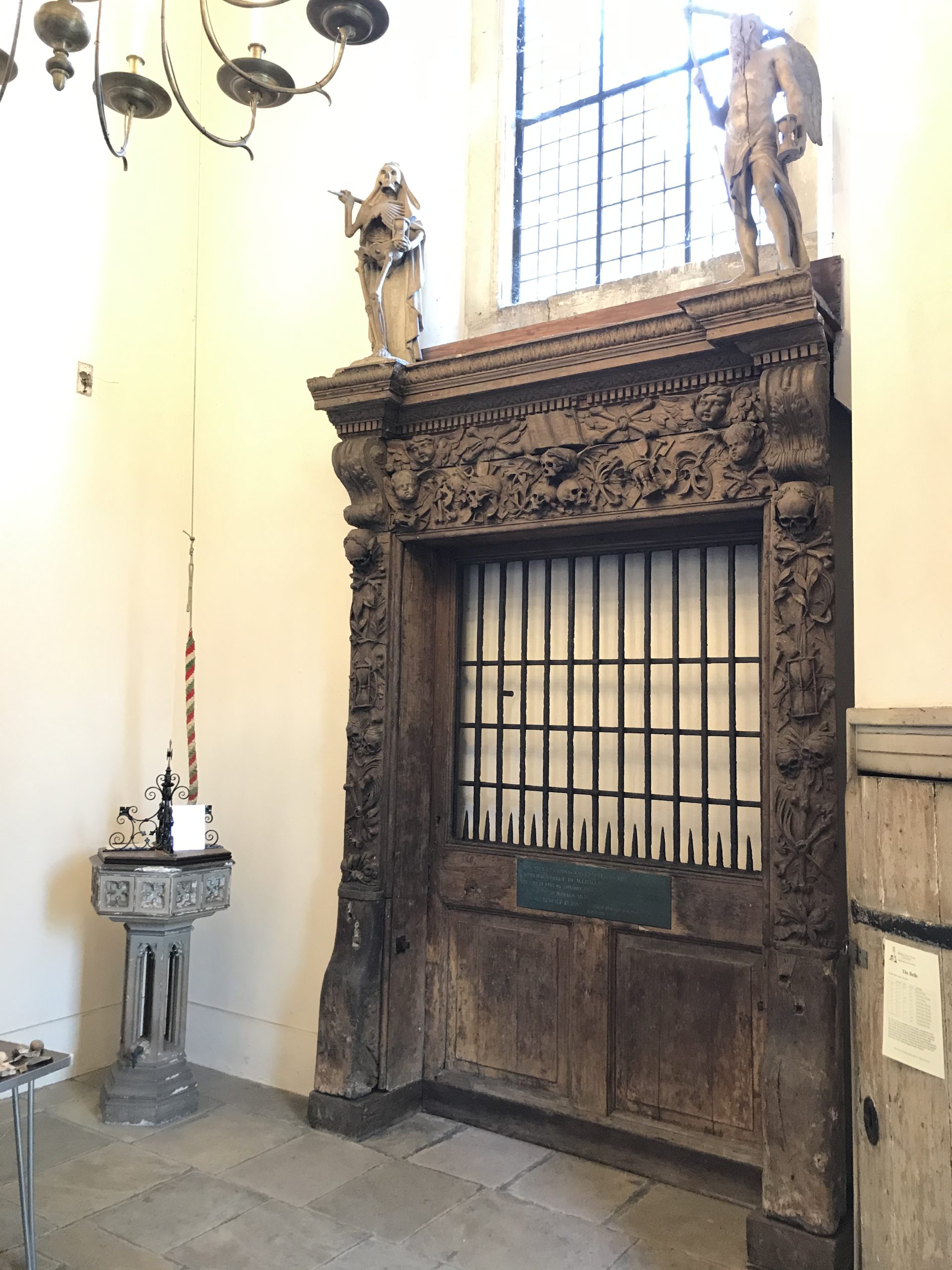
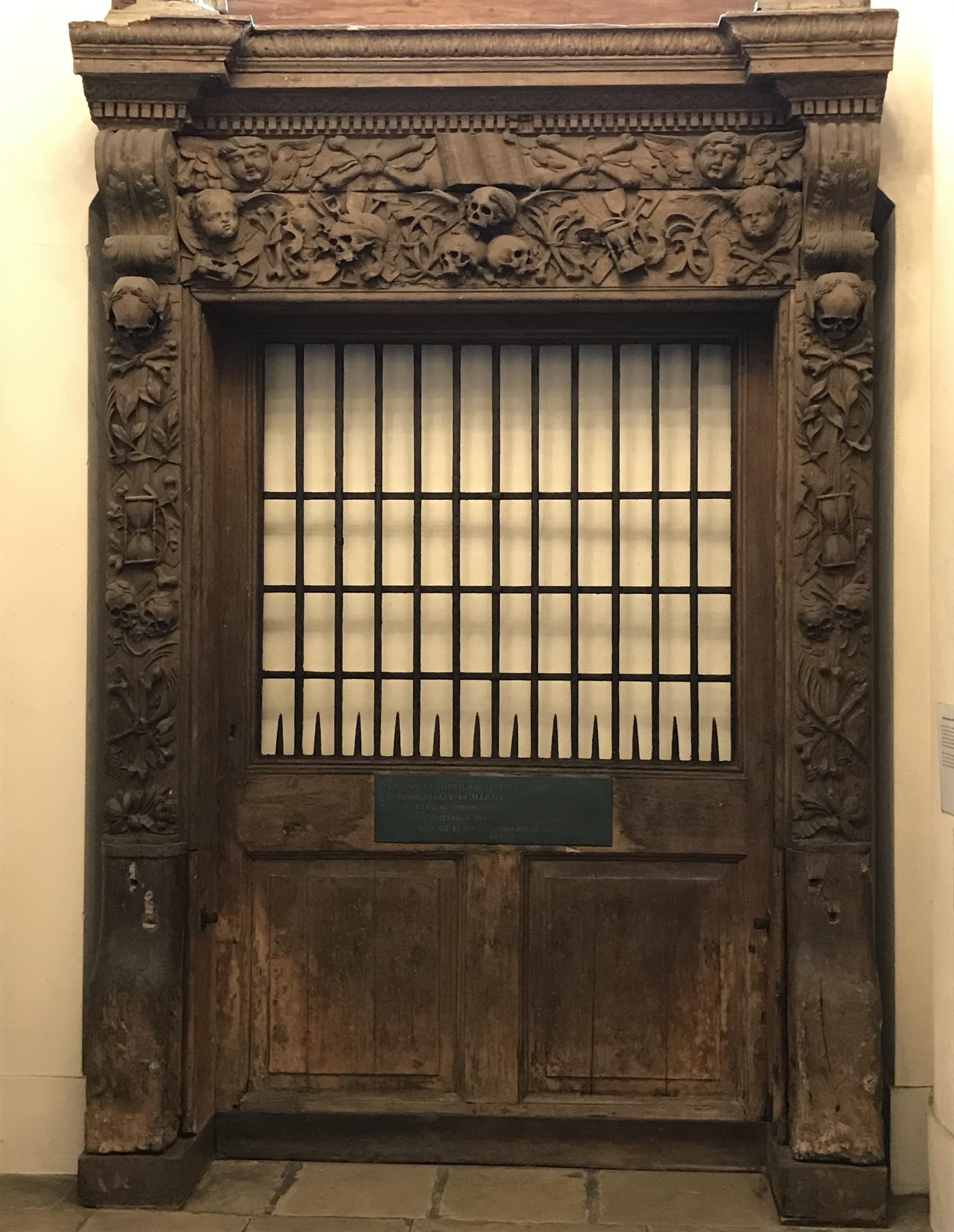
All Hallows Church in Twickenham is home to a 17th century timber gateway, richly carved with cherubs and memento mori skulls and fitted with wrought iron bars. Centuries of exposure had left the gate coated in ingrained dust, stained by mobilised salts from historic chemical treatments, and marked by corrosion to the iron. Angelo Aviles was appointed as conservator to assess, treat, and stabilise the gateway for long-term display.
The Challenge
An environmental survey by Hutton + Rostron Environmental Investigations Ltd had identified hygroscopic salts left behind by earlier treatments, reactivated by recent moisture, alongside historic corrosion to the iron bars that fluctuating humidity had likely accelerated. On inspection, further issues came to light: decades of dust embedded in the carvings’ hollows and ledges, several carved cherub and skull faces that had slipped out of alignment from old single-nail repairs, and UV bleaching on the lower left of the gate caused by a recurring beam of sunlight through the tower doors.
The Approach
Treatment followed methods documented by Anzani et al. (2010) and the British Museum, chosen for their proven effectiveness and low risk to the historic fabric. The project was carried out in five phases:
Phase 1 — Clearance. A HEPA-grade dust extractor was used to clear rubbish that had collected behind the gate over the years, recovering items ranging from leaves and sweet wrappers to a children’s Christmas newsletter dated 1956.
Phase 2 — Surface cleaning. Every surface of the gate — front, back, top, and the carved figures above — was cleaned of dust and cobwebs, with a fine brush and cocktail stick used to lift solidified grime from the carvings’ crevices without disturbing the timber.
Phase 3 — Salt removal. An agar gel poultice was used to draw historic salt staining out of the timber section by section, with any remaining crystals lifted mechanically using a cocktail stick and porcupine quill.
Phase 4 — Finishing the timber. Microcrystalline wax, applied with cotton buds, lifted ingrained dirt from the carvings and restored the natural colour of the wood, with the UV-faded area benefiting from several additional coats. The wax remains fully reversible with white spirit for any future conservation.
Phase 5 — Iron treatment. Loose corrosion was carefully removed from the iron bars with a scalpel, avoiding any abrasive method that would leave shining marks. A metal de-corroder was applied and left to react before being wiped away, and the bars were finished with a thin coat of microcrystalline wax.
Throughout the project, the loosened cherub and skull carvings were carefully realigned to their original setting.
The Outcome
The gateway’s carvings, timber, and ironwork were fully cleaned, stabilised, and protected, with decades of embedded dirt and disfiguring salt staining removed and the UV-damaged timber restored in appearance. The project also produced a simple, low-cost maintenance plan for the church: an annual HEPA vacuum clean (nozzle held at least 70mm from the timber), doubling as an informal condition survey, plus wax reapplication as needed and a reversible dowel-and-Paraloid B72 repair method identified for the carved faces should further conservation be required.